


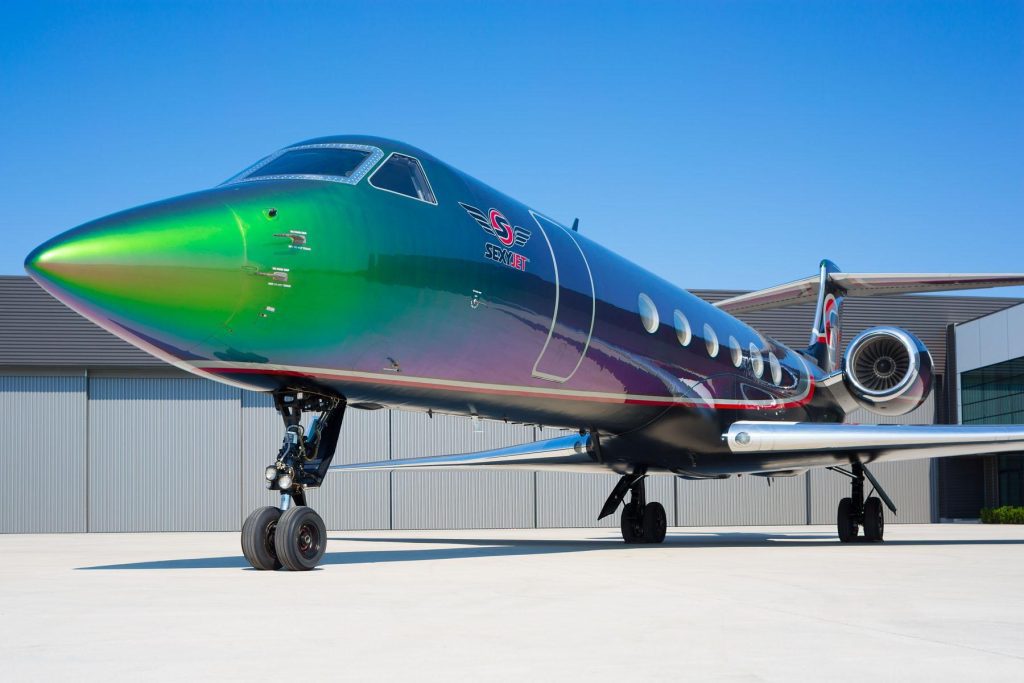
Aviation has always been a symbol of human innovation and progress, enabling us to travel faster and further than ever before. However, despite advancements in safety and technology, emergency landings remain one of the most critical concerns in aviation. In recent years, engineers and aerospace innovators have begun to explore radical new ideas to improve the safety of private jets, including a concept that may seem straight out of science fiction: private jets that can split into two during emergency situations.
Imagine a scenario where, mid-flight, a mechanical issue or another emergency arises. Instead of relying solely on traditional emergency procedures, the jet’s innovative design would enable it to split into two separate sections, allowing for a safer, more controlled emergency landing. While this may sound like a futuristic dream, the concept of splitting jets for emergency landings is becoming an increasingly realistic possibility, thanks to advancements in aviation engineering, materials science, and safety protocols.
In this article, we will explore the potential of this groundbreaking concept, how it could transform the future of private aviation, and the technological innovations that might make it a reality.
The Need for Enhanced Safety in Private Jet Aviation
Private jet owners enjoy a very uniqueed convenience and luxury, but with that freedom comes a responsibility to ensure safety. Despite the inherent safety of modern aircraft, private jets still face unique challenges that commercial airlines typically don’t encounter. These challenges include:
- Smaller Aircraft: Private jets are generally smaller than commercial airliners, which means they often don’t have access to the same safety features, like advanced emergency landing zones and support infrastructure.
- Limited Backup Systems: While commercial airliners are equipped with multiple redundant systems to keep the aircraft operational in the event of a malfunction, private jets often have fewer backup systems, which can lead to critical failures in the event of an emergency.
- Less Frequent Monitoring: Smaller aircraft may not always be monitored as frequently or thoroughly as commercial airliners, which could delay the identification of problems before they become critical.
Given these challenges, the idea of designing private jets that can split into two during emergencies could provide a revolutionary safety upgrade that addresses these concerns.
How a Private Jet Could Split into Two for Emergency Landings
The concept of a private jet that splits into two for emergency landings revolves around creating a dual-segment aircraft design. In essence, the aircraft would be engineered in such a way that it could be divided into two parts: a main fuselage and a detachable section. This detachable section would likely be the cockpit or the passenger cabin, while the rest of the aircraft would serve as the engine and control section.
In an emergency, the aircraft would be able to perform a controlled separation, with both sections independently gliding or descending to the ground. This separation would enable both parts to land safely, either on the same trajectory or at different locations. The key aspects of this concept include:
- Autonomous Separation Mechanism: The aircraft would be equipped with an autonomous system capable of detecting the emergency and automatically triggering the separation process. This could involve advanced sensors and AI algorithms that analyze the aircraft’s condition in real-time, making split-second decisions on when and how to detach the two sections.
- Enhanced Aerodynamics: After separation, both the main fuselage and the detachable section would need to have designs that ensure they can descend safely. Aerodynamic features like parachutes, wings, and stabilizing fins would help guide each section to the ground, minimizing the risk of injury or damage.
- Separation Protocols: A sophisticated separation protocol would need to be developed to ensure that the two parts of the aircraft could detach and safely navigate the emergency landing. The protocols would include flight path calculations, terrain analysis, and real-time communication between the two sections to ensure a safe landing for both.
- Safety Features for Both Sections: Each section of the aircraft would need to be designed with safety in mind, from crash-resistant seats in the passenger compartment to advanced control systems in the engine section. The goal would be to ensure that no matter which section lands, it remains intact and safe for the people on board.
Key Technologies Behind the Split-Jet Concept
While the idea of splitting private jets into two might sound like science fiction, several technological advancements could make this concept a reality:
- Advanced Materials Science
The success of a split-jet design depends on the use of lightweight yet strong materials that can withstand the forces of an in-flight emergency while also being durable enough to protect passengers during the separation process. Engineers would likely use materials like carbon fiber composites and titanium alloys, which are already common in aerospace engineering due to their strength-to-weight ratios.
These materials would need to be integrated into the aircraft’s structure in a way that allows it to separate without compromising the safety of its occupants. The materials used in the detachable section would also need to be resilient enough to protect passengers upon landing.
- Autonomous Flight Control Systems
For a private jet to safely split into two during an emergency, autonomous flight control systems would be essential. These systems would monitor the aircraft’s health and performance, detecting issues like engine failure, structural damage, or system malfunctions. Using artificial intelligence (AI) and machine learning, these systems could predict the likelihood of a failure and initiate the separation process when necessary.
Once the jet is split, each section would need its own autonomous control system to guide it safely to the ground. These systems would be responsible for stabilizing the flight path, adjusting altitude, and ensuring that both sections land as safely as possible.
- Parachutes and Gliding Systems
Once separated, both sections of the aircraft would need to descend safely to the ground. One of the most straightforward ways to ensure this is by using parachutes. Modern parachute technology is highly reliable, and large parachutes could be deployed from the detachable cabin and fuselage sections to slow their descent. Additionally, gliding wings or stabilizing fins would help control the descent of the sections, allowing them to land in a more controlled manner.
- Advanced Communication Systems
To ensure that both parts of the jet remain coordinated during the emergency landing, advanced communication systems would need to be in place. Real-time data transfer between the two sections would allow them to adjust their flight paths to avoid collisions and ensure both land safely. These systems would be powered by satellite communications and real-time GPS tracking, ensuring continuous communication, even in remote areas.
The Impact on Private Jet Safety and Ownership
The introduction of a jet that can split into two for emergency landings would undoubtedly have a significant impact on private jet safety. Not only would it enhance the safety of passengers and crew members, but it could also lead to lower insurance premiums for private jet owners. The technology could be marketed as a major safety feature that reduces the risk of fatalities in the event of an emergency.
Moreover, the promise of enhanced safety could make private jets more accessible to a broader range of owners. As the cost of private jet ownership continues to decline due to advancements in technologies like fractional ownership and AI-powered aircraft management, the concept of a split-jet could become a major selling point for prospective buyers.
Challenges and Limitations
While the idea of a jet that splits into two for emergency landings is undeniably exciting, there are several challenges that need to be overcome before it becomes a reality:
- Technological Complexity: Designing an aircraft capable of safely splitting into two during flight is an incredibly complex task. It would require significant advancements in materials science, autonomous flight control, and real-time communication systems.
- Regulatory Approval: Any new aviation technology must go through extensive testing and certification before it can be implemented. The concept of a split-jet would require approval from aviation authorities like the Federal Aviation Administration (FAA) and the European Union Aviation Safety Agency (EASA).
- Cost: The development and production of split-jets would likely be costly, which could limit their adoption to the highest-end private jet owners. However, as the technology matures and becomes more mainstream, costs may decrease.
Conclusion
The idea of future private jets that can split into two for emergency landings is an exciting and innovative concept that has the potential to transform private aviation. By combining advancements in materials science, autonomous flight control, and safety systems, this technology could offer a safer, more reliable flying experience for private jet owners. While there are still many obstacles to overcome, the future of aviation safety looks promising, and split-jets could one day become a staple in the private jet market.


