


The world of luxury aviation is evolving rapidly, with cutting-edge technology enhancing comfort, efficiency, and sustainability. Leading manufacturers like Gulfstream, Bombardier, Dassault, and Airbus are redefining private jet travel with state-of-the-art advancements. In this comparative review, we examine the latest technological trends shaping elite jet models, from performance upgrades to intelligent cabin systems.
Advanced Cabin Automation and AI Integration
AI-driven automation is transforming luxury jet interiors, providing a seamless passenger experience. Gulfstream’s G700 features an AI-powered cabin management system that allows travelers to control lighting, temperature, and entertainment through voice commands or mobile apps. The Bombardier Global 7500 includes the “Nice Touch” system, which personalizes cabin settings based on passenger preferences. Dassault’s Falcon 10X integrates biometric seat adjustments, ensuring optimal comfort by automatically adapting to individual body contours.
High-Speed Connectivity and In-Flight Entertainment
Elite jets are equipped with next-generation connectivity solutions, enabling uninterrupted communication. The Bombardier Global 8000 and Gulfstream G700 offer Ka-band satellite internet, ensuring high-speed browsing and video conferencing. Dassault’s Falcon 10X features immersive 4K ultra-high-definition entertainment screens with surround sound. Boeing Business Jets (BBJ) models integrate virtual reality (VR) entertainment zones, providing an unparalleled in-flight experience.
Long-Range Performance and Fuel Efficiency
Luxury jet manufacturers are optimizing performance to meet the growing demand for long-haul travel. The Bombardier Global 8000 leads with an 8,000-nautical-mile range, allowing nonstop flights between cities like New York and Hong Kong. Gulfstream’s G700 offers Rolls-Royce Pearl 700 engines, enhancing fuel efficiency and operational range. Dassault’s Falcon 10X incorporates advanced aerodynamics, reducing drag and optimizing fuel consumption. These innovations enable faster, more efficient global travel.
Sustainable Aviation and Eco-Friendly Materials
Sustainability is a key focus in modern luxury aviation. Gulfstream and Bombardier are pioneering the use of Sustainable Aviation Fuel (SAF) to reduce carbon emissions. Airbus ACJ models integrate lightweight composite materials, lowering fuel consumption. Dassault’s Falcon 10X features low-emission engine technology, enhancing environmental efficiency. These advancements ensure that luxury travel aligns with global sustainability goals.
Noise Reduction and Enhanced Cabin Acoustics
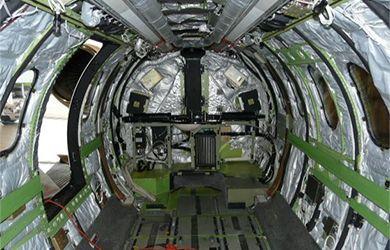
Soundproofing technology has reached new heights in luxury jets, creating a tranquil in-flight environment. Bombardier’s Global 7500 boasts the industry’s quietest cabin, thanks to advanced acoustic insulation. Gulfstream’s whisper-quiet design minimizes engine and airflow noise, providing a serene experience. Dassault’s Falcon 10X employs automotive-inspired soundproofing techniques, ensuring an exceptionally quiet journey.
Safety Innovations and Predictive Maintenance
Cutting-edge safety features enhance passenger protection in luxury jets. Gulfstream’s G700 includes turbulence-detection radar, ensuring smoother flights. Dassault’s Falcon 10X introduces biometric cabin access for enhanced security. Boeing BBJ models feature encrypted communication systems, safeguarding confidential discussions. AI-driven predictive maintenance systems preemptively detect mechanical issues, ensuring maximum reliability and safety.
Custom Interiors and Personalization
The ability to customize jet interiors to match personal tastes is a hallmark of elite aviation. Airbus ACJ models offer fully modular cabin configurations, allowing owners to integrate private offices, entertainment lounges, and spa facilities. The Boeing BBJ 787 features customizable en-suite bedrooms with walk-in closets. Bombardier’s Nuage seat technology provides fully reclining positions, transforming into personal relaxation spaces.
Future Trends in Luxury Jet Technology
The future of luxury aviation will see the rise of supersonic travel, AI-driven flight automation, and biometric health monitoring. Companies like Boom Supersonic are developing jets capable of reducing transatlantic flight times by half. AI-powered pilot assistance systems will enhance operational efficiency, while biometric sensors will optimize passenger wellness, adjusting cabin conditions for maximum comfort.
Luxury jets are at the forefront of technological innovation, offering unmatched performance, comfort, and sustainability. As advancements continue, private air travel will reach new heights, redefining the standards of exclusivity and efficiency for elite travelers.


