PrivateJetia Private Jet Fly 4
The private jet industry has long been associated with luxury, comfort, and exclusivity. But over the years, technology has played a crucial role in revolutionizing the way we travel in the skies. From sustainable aviation to next-generation entertainment systems, private jets are evolving into high-tech, environmentally-conscious, and more efficient machines. In this article, we will explore the most innovative technologies that are shaping the future of private aviation.
1. Sustainable Aviation Technology
As the world focuses more on environmental issues, sustainability in aviation has become a key priority. Private jet manufacturers and operators are implementing green technologies to reduce their carbon footprint and improve the efficiency of air travel. Here are some of the key innovations:
a. Sustainable Aviation Fuel (SAF)
Sustainable Aviation Fuel (SAF) is a revolutionary technology that reduces carbon emissions compared to traditional jet fuel. SAF is made from renewable resources such as plants, algae, and waste oils, which can reduce carbon emissions by up to 80% over the fuel’s lifecycle. Many private jet companies are investing in SAF to make flying private more eco-friendly.
b. Electric and Hybrid-Electric Aircraft
Electric aviation is no longer a distant dream. Several companies are working on electric aircraft and hybrid-electric systems that will drastically reduce the environmental impact of private flying. Companies like Alice by Aviation, a fully electric plane developed by Eviation Aircraft, are expected to change the landscape of short regional flights. These electric planes are quieter, more energy-efficient, and emit no direct emissions.
c. Hydrogen-Powered Jets
The future of sustainable private aviation also includes hydrogen-powered jets. Hydrogen is a zero-emission fuel that could significantly reduce the aviation sector’s carbon footprint. Companies like ZeroAvia are working on hydrogen-powered engines that could lead to cleaner and more efficient private jets in the near future.
2. Advanced In-Flight Entertainment Systems
Private jets have long been synonymous with luxurious amenities, but today, technology is taking in-flight entertainment to new heights. Advanced entertainment systems allow passengers to enjoy an unprecedented level of comfort and relaxation while flying.
a. High-Speed Internet Connectivity
Gone are the days when private jet passengers were disconnected from the internet. Thanks to high-speed satellite internet, travelers can enjoy seamless Wi-Fi connectivity during their flights. Companies like Gogo Business Aviation and Inmarsat are providing global coverage that ensures passengers can stay connected, work, or stream media without interruption, no matter where they are flying.
b. Interactive Digital Displays
Innovative interactive digital displays are becoming standard in private jets, allowing passengers to control every aspect of their experience with a simple touch. From adjusting the cabin lighting to controlling the temperature and entertainment system, these high-tech interfaces give passengers complete control of their environment.
c. Immersive Virtual Reality (VR) Experiences
Private jet manufacturers are exploring virtual reality (VR) as part of the in-flight entertainment offering. With VR headsets and immersive experiences, passengers can enjoy everything from virtual sightseeing to entertainment that feels more engaging and interactive than ever before.
3. Smart Cabin Technologies
One of the most significant advancements in private jets is the incorporation of smart cabin technologies. These innovations focus on enhancing the comfort and convenience of passengers, making the flying experience feel like a home away from home.
a. Automated Cabin Climate Control
Automated cabin systems now allow for smart temperature control that adapts to the preferences of passengers in real-time. Sensors can detect the optimal temperature based on the number of people onboard and the external environment, ensuring passengers are always comfortable.
b. Mood Lighting
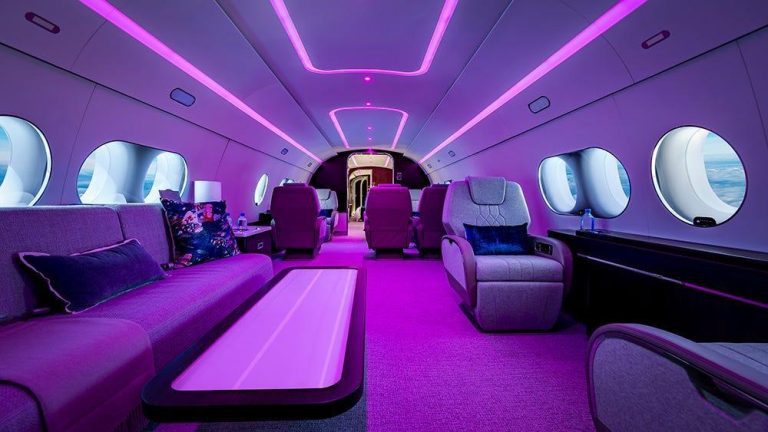
Incorporating advanced LED lighting systems in private jet cabins helps create the perfect ambiance for any occasion. Mood lighting systems can adjust to the time of day or the passenger’s preferences, from a warm, inviting glow to a calming, cool light. These systems are often customizable, allowing for color-changing features that promote relaxation and enhance the luxury experience.
c. Voice-Controlled Systems
Private jet owners can now take advantage of voice-controlled systems to adjust the cabin environment. Through voice assistants like Amazon Alexa or Siri, passengers can control entertainment, lighting, and even order food or drinks. This hands-free operation makes for an effortless, high-tech flight experience.
4. Noise Reduction Technologies
Flying in a private jet is about luxury, and one of the critical factors contributing to that experience is comfort. Noise reduction technologies are now standard in modern private jets, ensuring a quieter cabin for more restful travel. These technologies include:
a. Active Noise Cancellation (ANC)
Many private jets now come equipped with active noise cancellation systems that significantly reduce engine and cabin noise. These systems use microphones and speakers to detect unwanted sounds and create opposing sound waves, effectively canceling out the noise. This leads to a quieter, more serene flying experience.
b. Soundproofing Materials
The materials used in the construction of private jets are also evolving to improve noise isolation. Advanced soundproofing materials, such as acoustic panels and noise-absorbing materials, are integrated into the cabin to create a peaceful and quiet environment for passengers.
5. Autonomous Flying Technology
The aviation industry is continuously working towards the idea of autonomous flight, where jets can fly without direct human intervention. In private aviation, the push for automation is already underway, and several innovations are in the works.
a. Autopilot Systems
Most modern private jets come equipped with advanced autopilot systems that can assist pilots in managing flight tasks, allowing them to focus on higher-level functions. These systems use advanced algorithms to adjust to environmental conditions and optimize flight paths for efficiency and safety.
b. Unmanned Aircraft Systems (UAS)
Unmanned aircraft, or drones, are being tested as a part of the autonomous aviation revolution. Companies like Joby Aviation and Vertical Aerospace are working on aircraft that can carry passengers with minimal human intervention. Although not yet in full-scale use, this technology could soon reshape private aviation by making flights safer, faster, and more affordable.
6. Augmented Reality for Pilots
Augmented reality (AR) is another innovative technology that is changing the way private jets operate. For pilots, AR provides real-time visual overlays of essential flight data directly onto the windshield, making it easier to navigate complex airspace and ensure safer, more efficient flight paths.
7. Seamless Mobile Integration
In today’s digital age, passengers expect seamless integration between their devices and the systems onboard their aircraft. Modern private jets now offer mobile connectivity that allows passengers to interact with the jet’s entertainment, lighting, and climate systems via their smartphones or tablets.
Mobile integration also allows for personalized services. Passengers can pre-order meals, adjust their seating, or communicate with flight attendants directly from their devices, creating a more intuitive and convenient flying experience.
8. Security and Surveillance Technology
Safety is paramount in aviation, and private jets are equipped with cutting-edge security systems to ensure passengers and crew are protected at all times. Some of the latest technologies include:
a. Real-Time Surveillance Systems
Private jets now feature real-time surveillance to monitor the jet’s exterior and cabin. These advanced security systems provide video feeds of the aircraft’s surroundings and interior, ensuring the safety and comfort of passengers.
b. Biometric Authentication
To enhance security further, private jets are incorporating biometric authentication systems for passenger identification. Using facial recognition, retina scans, or fingerprint scanning, passengers can board with ease while ensuring their security.
Conclusion
The world of private jets is undergoing a technological revolution, with innovations that not only enhance the luxury and comfort of air travel but also prioritize sustainability, efficiency, and safety. From sustainable aviation fuel and electric aircraft to advanced in-flight entertainment and autonomous flying technology, the future of private aviation is incredibly exciting. As technology continues to advance, private jet travel will only become more efficient, personalized, and eco-friendly, further enhancing the elite experience for those who choose to travel by private jet.