PrivateJetia Private Jet Fly 89
In the last few decades, space exploration has evolved from a domain reserved for governments and large corporations to an emerging industry fueled by private companies, entrepreneurs, and even tourists. Space tourism, once a concept relegated to science fiction, is now becoming a reality. With private aviation already being a symbol of luxury, it’s no surprise that the potential for space tourism in private aviation has captured the imagination of both the public and private sectors. As the world’s richest individuals and leading aerospace companies push the boundaries of space travel, private aviation is poised for a profound transformation.
Space tourism, particularly when combined with private aviation, could redefine what luxury travel means. Instead of merely crossing continents in comfort and style, it could soon involve venturing into the stratosphere for the ultimate adventure. As the commercial space travel industry continues to grow, it is bound to intersect more frequently with private aviation, creating opportunities for new innovations, business models, and even customer experiences that previously seemed unthinkable.
The Emergence of Space Tourism
Space tourism refers to the activity of sending private individuals into space for recreational, leisure, or business purposes, as opposed to professional astronauts. While the first steps in space tourism were taken by government space agencies, it was the pioneering work of private companies such as SpaceX, Blue Origin, and Virgin Galactic that brought the concept to the forefront. Each of these companies is working to create an experience that allows people to not only travel to the edge of space but to do so in comfort, with safety as a top priority.
The progress made in space tourism has already made significant waves in the private aviation sector. Much like private aviation, which has evolved to accommodate the needs of high-net-worth individuals, space tourism is designed to cater to the desires of a wealthy elite. These individuals are not only willing to pay the high cost of entry but are eager to experience a new frontier of luxury that will make them part of history. The idea of taking a private jet to space is no longer just a whimsical thought, it’s a real possibility that’s closer to becoming mainstream with every passing year.
Space Tourism and Private Aviation: A Natural Intersection
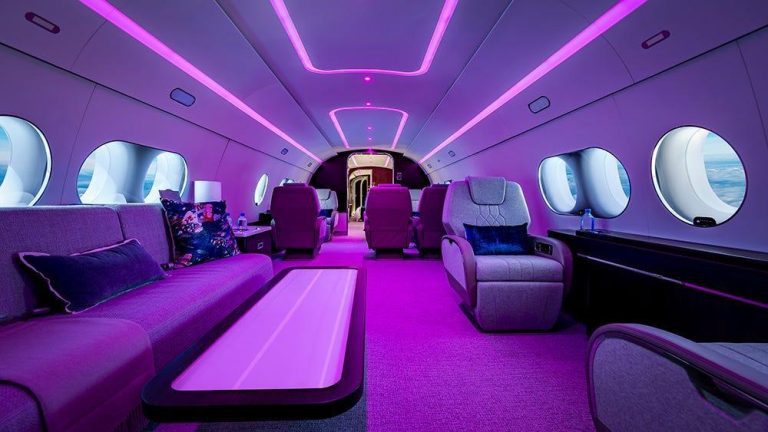
Private aviation and space tourism share a lot of similarities. Both sectors cater to affluent customers who seek exclusivity, luxury, and personalized services. The convergence of these two industries could be more profound than anyone anticipates, with each field enhancing the other to offer a new level of comfort, style, and luxury in space travel. Private aviation companies are already known for offering services such as bespoke in-flight catering, fully customized interiors, and on-demand flights. These aspects of private aviation are highly transferable to the concept of space tourism.
One of the key intersections between private aviation and space tourism is in the development of spaceports. Just as airports are specifically designed to handle private jets, spaceports are being constructed to accommodate suborbital and orbital flights. These spaceports are expected to evolve to provide similar comforts and services as private aviation terminals, with premium lounges, concierge services, and private accommodations that enhance the experience for passengers. As space tourism becomes more widespread, it is likely that private aviation companies will become closely involved in this space, offering seamless travel experiences from Earth to space and back.
Private Jet Companies and Their Role in Space Tourism
Several private jet companies have already shown interest in the potential of space tourism. These companies, known for their world-class service and high-end clientele, are well-positioned to integrate space tourism into their portfolios. Private jet companies like NetJets and Gulfstream, which specialize in luxury air travel, are already exploring how they can offer a combined service that bridges the gap between commercial aviation and space travel.
For instance, these companies may offer flight packages that allow passengers to experience the comforts of a private jet flight to a spaceport, where they can board a suborbital spacecraft to the edge of space. The seamless transition from private jet to spacecraft would allow clients to enjoy a cohesive luxury travel experience. They could relax in the comfort of a private jet, enjoy gourmet meals, and then ascend into the stratosphere in a spacecraft that offers the same level of care and service. As space tourism continues to gain popularity, expect private jet companies to provide this kind of integrated offering for their discerning customers.
Space Tourism: A New Era of Luxury Travel
Space tourism holds the potential to revolutionize luxury travel in ways that were previously unimaginable. The idea of taking a trip to space appeals to the ultra-wealthy, those who have already experienced the finest accommodations, private jet flights, and luxury vacations. For them, the opportunity to venture beyond the Earth’s atmosphere offers an entirely new level of exclusivity and excitement.
Unlike traditional air travel, which is constrained by the Earth’s atmosphere, space travel offers the unique experience of weightlessness and the chance to view Earth from a perspective that few have ever seen. Imagine the opportunity to float in a spacecraft while sipping champagne, gazing out at Earth from a window thousands of miles above the planet’s surface. For these individuals, the experience goes beyond the journey itself, it becomes an event, a once-in-a-lifetime opportunity that offers both luxury and adventure.
The appeal of space tourism lies not just in the novelty of the experience but in the way it intersects with the lifestyle of the wealthy elite. Space tourism is not just about taking a trip to space, it’s about doing so in the utmost luxury. This is where private aviation comes in. By combining the luxury and exclusivity of private jets with the thrill of space tourism, these industries are poised to offer an unprecedented experience.
The Technological Innovations Enabling Space Tourism
The development of space tourism has been made possible through advancements in aerospace technology. Companies like SpaceX, Blue Origin, and Virgin Galactic have designed spacecraft that are specifically customized for space tourism. These spacecraft are designed not only for efficiency and safety but for comfort and luxury.
For example, Virgin Galactic’s SpaceShipTwo is a suborbital vehicle that is designed to carry passengers into space. The vehicle includes spacious cabins with large windows for optimal viewing of the Earth and space. The spacecraft is also equipped with safety features such as automatic abort systems to ensure that passengers are protected at all times. Blue Origin’s New Shepard and SpaceX’s Starship are other examples of spacecraft being developed with the goal of offering luxury experiences in space. These innovations are making space tourism accessible to a broader market and driving the potential for private aviation’s role in this new frontier.
The Future of Space Tourism in Private Aviation
As space tourism becomes more viable, its intersection with private aviation will become increasingly important. Private jet companies are already working on creating an integrated experience that combines traditional luxury air travel with the excitement of space. This could involve seamless transitions from private jet flights to spaceports and spacecraft, creating a journey that is as smooth as it is thrilling.
In the future, we may see the development of space-tourism-only private jets, designed specifically for the journey to and from space. These aircraft would be equipped with the latest technologies and luxury amenities to ensure a safe, comfortable, and memorable experience for passengers. The future of space tourism in private aviation could also see the introduction of new models of spacecraft, potentially combining the style and elegance of private jets with the technological capabilities needed for space travel.
The Challenges Ahead
Despite the enormous potential of space tourism, several challenges remain. The cost of space travel is still extremely high, with tickets ranging from $250,000 to over $55 million for some of the most premium experiences. For space tourism to become more accessible to a broader market, the industry must find ways to reduce these costs while maintaining the luxury experience.
Additionally, space travel presents unique safety challenges that must be addressed. Although advancements in technology are making space tourism safer than ever before, there are still inherent risks involved. Private aviation companies will need to collaborate closely with space tourism providers to ensure that safety protocols are rigorous and effective.
Conclusion
The potential of space tourism in private aviation is both exciting and transformative. By blending the luxury and exclusivity of private jets with the thrill and adventure of space travel, this emerging industry is poised to redefine the very concept of luxury travel. With advancements in technology and the growing interest of affluent individuals in exploring new frontiers, the future of space tourism is bright, and private aviation will undoubtedly play a pivotal role in shaping its success. As the industry continues to evolve, the possibilities for integrating space tourism into private aviation are endless, and we are just beginning to scratch the surface of what’s possible.