PrivateJetia Private Jet Fly 46
When it comes to the design of private jets, the choice of interior fabrics and materials plays a pivotal role in creating a luxurious, comfortable, and personalized flying experience. As private aviation continues to evolve, new trends are emerging in the selection of materials that not only enhance the aesthetics of the cabin but also provide superior durability, comfort, and sustainability. The latest trends reflect a growing demand for innovation, eco-consciousness, and opulence, transforming how the interiors of private jets are designed.
In this article, we will explore the top trends in private jet interior fabrics and materials, including the shift toward luxury textiles, sustainable options, and technological advancements that are shaping the future of air travel.
1. The Role of Fabrics and Materials in Private Jet Interiors
Before delving into the specific trends, it’s essential to understand why fabrics and materials are so important in private jet interiors. The interior of a private jet is not just about aesthetics; it’s about creating an atmosphere that reflects the owner’s personality, ensures maximum comfort, and optimizes functionality. These materials influence:
- Passenger comfort: Soft and durable fabrics provide relaxation and warmth, which is crucial on long flights.
- Durability and performance: Aviation-grade materials are selected for their resilience to wear and tear, ensuring the interiors maintain their luxury appeal.
- Aesthetic appeal: The fabrics and materials chosen are essential in creating a visually striking cabin that aligns with the owner’s tastes.
- Sustainability: With increased attention to environmental concerns, designers are incorporating eco-friendly materials into jet interiors to minimize their carbon footprint.
2. Sustainable Fabrics and Materials
One of the most significant trends in private jet interior design is the push toward sustainability. As the world becomes more conscious of environmental impacts, jet owners are increasingly requesting eco-friendly fabrics and materials that are both luxurious and sustainable.
a. Recycled Materials
Incorporating recycled materials into jet interiors is becoming more common. Fabrics made from recycled polyester, nylon, and wool are not only eco-friendly but also durable and soft. These materials provide high performance, ensuring that the interior remains luxurious without sacrificing environmental responsibility.
For example, recycled leather and upcycled textiles are gaining popularity. These materials are not only sustainable but also contribute to the unique look and feel of the cabin. The use of recycled materials in private jet design is an important step toward reducing the aviation industry’s carbon footprint.
b. Natural and Organic Fabrics
Organic fabrics such as organic cotton, bamboo, and hemp are being integrated into private jet interiors. These fabrics are made from natural fibers and require fewer chemicals and less water during production. They are biodegradable, ensuring that the materials used in the jet’s design are less harmful to the environment.
The use of natural fabrics provides a rustic, earthy charm while offering superior comfort. Designers are also experimenting with organic linen and wool, which bring texture and warmth to private jet cabins.
c. Sustainable Wood Finishes
Wood remains a popular material in jet interiors, but there is a growing demand for sustainable wood finishes. Designers are using materials sourced from certified forests that ensure the preservation of natural ecosystems. Reclaimed wood and faux wood finishes are also used to create a luxurious, eco-friendly environment inside the aircraft.
3. High-Performance and Luxury Materials
While sustainability is a key factor, private jet interiors are still expected to showcase luxury, refinement, and high performance. Jet owners want materials that not only look stunning but also provide superior comfort, durability, and functionality.
a. Premium Leathers and Upholstery
Leather continues to be one of the most coveted materials in private jet interiors. However, the latest trends show a preference for vegan leather and other cruelty-free alternatives that do not compromise on quality. Vegan leather, made from plant-based materials such as pineapple leaves (Piñatex) or apple peels, is gaining popularity in luxury design. These materials are durable, easy to clean, and highly customizable.
For those who still prefer traditional leather, premium cowhide leather remains a top choice. Designers select handcrafted leathers in a range of finishes, from matte to glossy, and in various colors that match the jet’s aesthetic. Leather seats, armrests, and headrests offer a plush, comfortable experience.
b. High-Tech Fabrics
Incorporating high-tech fabrics into the design is another emerging trend in private jet interiors. These fabrics combine the elegance of luxury textiles with cutting-edge functionality. For example, nano-coated fabrics provide resistance to stains, water, and fire, ensuring that the interiors remain pristine throughout the flight.
Self-cleaning fabrics are also being used in private jets to reduce maintenance needs. These fabrics use nano-technology to resist dirt and stains, making them ideal for the high-traffic areas of the cabin, such as seats and upholstery.
c. Exotic and Rare Materials
Private jet owners often seek the rarest and most exotic materials to make their jet interiors stand out. Materials such as mother-of-pearl, tortoiseshell, and precious metals are integrated into the design for accents, trims, and finishes. These materials not only add elegance but also elevate the overall luxury experience, creating a cabin that is a true masterpiece.
For example, marble countertops and gold-plated hardware are increasingly being used in private jet interiors. Designers are also incorporating semi-precious stones like lapis lazuli and onyx for bespoke detailing.
4. Comfort and Functionality: Fabrics that Enhance the Flying Experience
Beyond the aesthetic appeal and sustainability of the materials, private jet interiors must also provide exceptional comfort and functionality for passengers. Fabrics and materials must be chosen with the goal of optimizing the flying experience, ensuring passengers feel relaxed and at ease during their journey.
a. Performance Fabrics for Seating
Seats are arguably the most critical part of any private jet interior. Designers use ergonomic fabrics and materials that offer support while maintaining a luxurious look and feel. Memory foam and high-density cushioning are often used in seat construction, ensuring that the upholstery remains comfortable even during long-haul flights.
Additionally, cool-touch fabrics are being integrated into seating materials, helping to regulate body temperature and enhance comfort during flights. These fabrics are particularly beneficial in private jets where passengers may spend hours in the cabin.
b. Soundproofing and Insulation Materials
One of the critical elements of private jet design is the ability to create a quiet, peaceful environment during the flight. Designers use soundproofing materials such as acoustic foam, fabric-wrapped insulation, and sound-dampening panels to reduce noise levels inside the cabin.
These materials help create a serene environment, which is essential for passengers who want to sleep, work, or relax in comfort. Soundproof fabrics and finishes are used for walls, ceilings, and even the upholstery of seats and headrests.
c. Soft Textiles for Relaxation
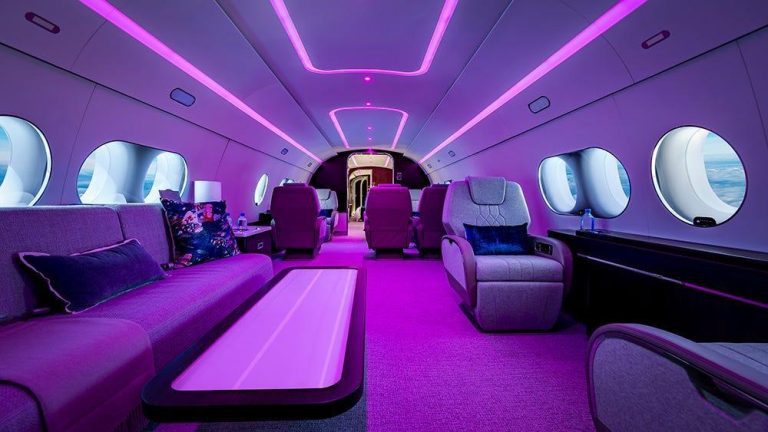
In addition to performance materials, soft textiles such as plush wool and velvet are used in private jet interiors to create a cozy atmosphere. Soft, textured fabrics are often used in throw blankets, pillows, and wall panels, adding warmth and tactile luxury to the cabin.
5. The Future of Private Jet Materials: Technology and Innovation
The future of private jet interiors lies in innovation and the integration of advanced technologies into materials that offer even more impressive functionality. Some of the anticipated trends in the coming years include:
a. Smart Fabrics and Materials
The next generation of smart fabrics will incorporate sensors and actuators that allow the materials to respond to external conditions. For example, temperature-sensitive fabrics could automatically adjust to the passenger’s body temperature, ensuring optimal comfort throughout the flight.
Self-healing materials are also in development, which could repair any minor damage (like scratches or scuffs) automatically, keeping the jet’s interior pristine.
b. Space-age Materials
As technology continues to advance, space-age materials like graphene are being considered for use in private jet interiors. These materials are incredibly lightweight, durable, and strong, making them ideal for aircraft design. In addition, aerospace-grade fabrics are being used to create ultra-lightweight and high-performance upholstery, reducing the overall weight of the jet and improving fuel efficiency.
6. Conclusion
The world of private jet interior fabrics and materials is constantly evolving, driven by a combination of luxury, sustainability, and technological innovation. Whether it’s the sustainable fabrics that reduce the environmental impact, the high-performance materials that enhance comfort and durability, or the luxurious textiles that define the aesthetic of the cabin, every detail is carefully selected to create an extraordinary flying experience.
As the demand for private jets continues to grow, interior designers will continue to push the boundaries of what is possible, creating bespoke interiors that are as comfortable and functional as they are visually stunning. The trends in fabrics and materials for private jet interiors are setting new standards for luxury, performance, and eco-consciousness, ensuring that future jets are as forward-thinking as the passengers who travel within them.